FAUCONSYSTEMS Faucon Field Notes
fauconsystems.com

Topic

Optics Explained

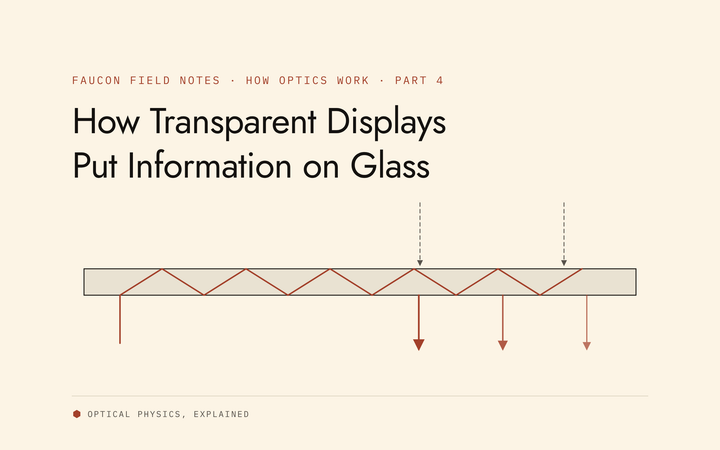
Cover for How Transparent Displays Put Information on Glass: light bounces along a thin glass plate by total internal reflection and exits toward the eye.
How Optics Work

How Transparent Displays Put Information on Glass

Head-up displays, smart glasses and illuminated sights all solve one problem: adding light to a view without blocking it. Here is how beam splitters, curved combiners and waveguides do it, and what each one gives up.
16 Nov 2026 · 8 min read

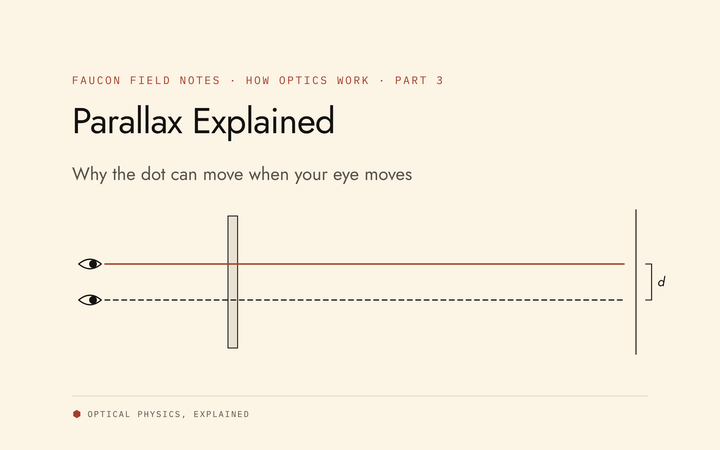
Cover for Parallax Explained: two eye positions behind a sight window, with parallel lines of sight reaching the target a distance d apart.
How Optics Work

Parallax Explained: Why the Dot Can Move When Your Eye Moves

Move your head behind a red dot and the dot moves too. Some of that is harmless and some is real offset on the target. Here is the geometry that separates the two, and why 'parallax-free' always comes with conditions.

15 Nov 2026 · 7 min read

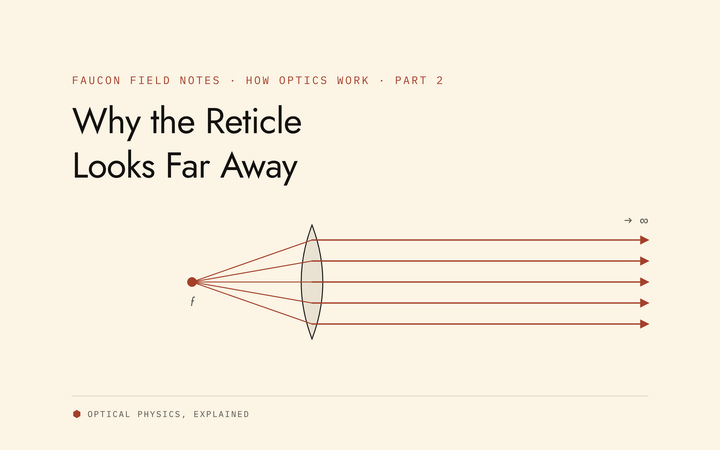
Cover for Why the Reticle Looks Far Away: rays from a source at a lens's focal point leave parallel, so the eye sees the source as if it were at infinity.
How Optics Work

Why the Reticle Looks Far Away

The glowing reticle in a sight is a few centimetres from your eye, yet it looks as far away as the target. The trick is collimation. Here is how it works, and why the apparent distance of an overlay matters so much.

13 Nov 2026 · 7 min read

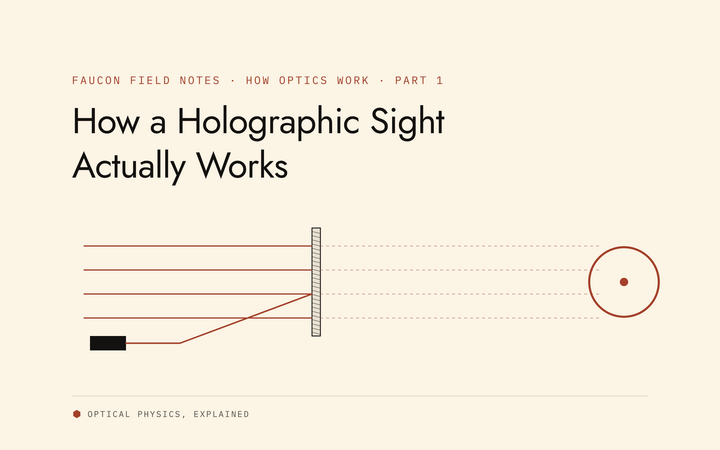
Cover for How a Holographic Sight Actually Works: a laser beam folds into a hologram window, forming a ring-and-dot reticle that appears far in front of the sight.
How Optics Work

How a Holographic Sight Actually Works

A holographic sight does not reflect a lit dot off a mirror. It replays a recorded hologram with laser light. Here is what each part of the light path does, and how that differs from an LED reflex sight.

11 Nov 2026 · 8 min read

Page 1 of 1
© 2026 Faucon Field Notes RSS Instagram